Software Engineer Resume — Tailored to the Job, ATS-Ready
A software engineer resume needs to show what you built, at what scale, and with which stack — not that you are passionate about technology. Recruiters and ATS both scan for the exact languages and frameworks in the posting, so a resume that mirrors the job description beats a generic one every time.
What makes a strong software engineer resume
Stack specificity — name the languages, frameworks, and tools you actually shipped with, matched to what the role lists.
Impact at scale — users, requests per second, latency improvements, or error rates tell more than "improved performance".
Ownership scope — features you led end-to-end vs. contributed to, and systems you designed vs. maintained.
System design signals — architecture decisions, trade-offs, or migrations you drove show seniority faster than a tech list.
Generic AI vs. tailored to the role
Most tools pad a software engineer resume with competence-claims. Resumetion replaces them with concrete facts from your real experience.
Passionate software engineer with experience building scalable, high-performance applications using modern technologies.
Built a real-time notification service in Go handling 40k events/sec, reducing alert latency from 8s to under 400ms for 2M users.
Keywords ATS looks for
Applicant tracking systems rank on terminology from the posting. These come up often for software engineer roles — include the ones that match your real experience.
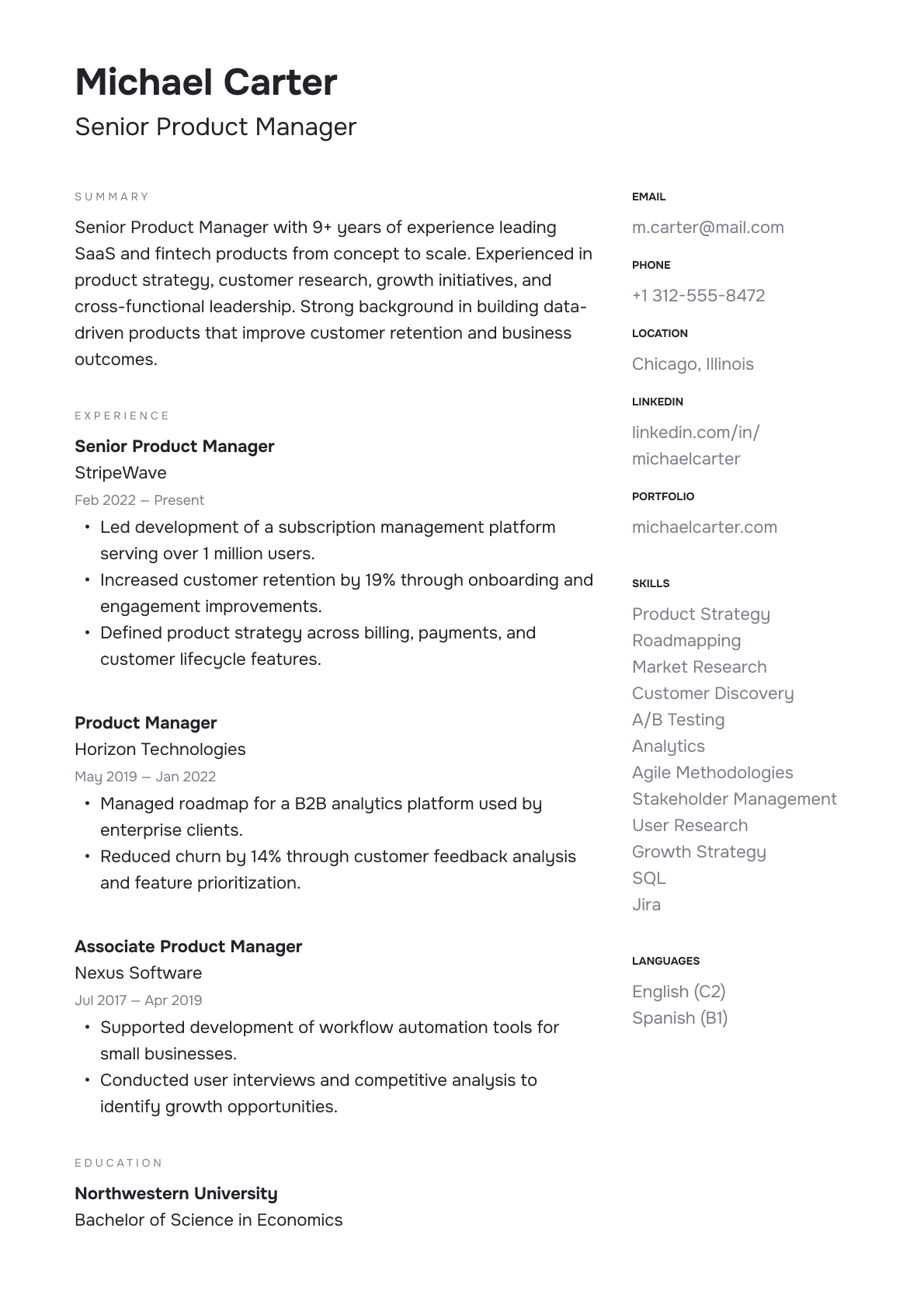
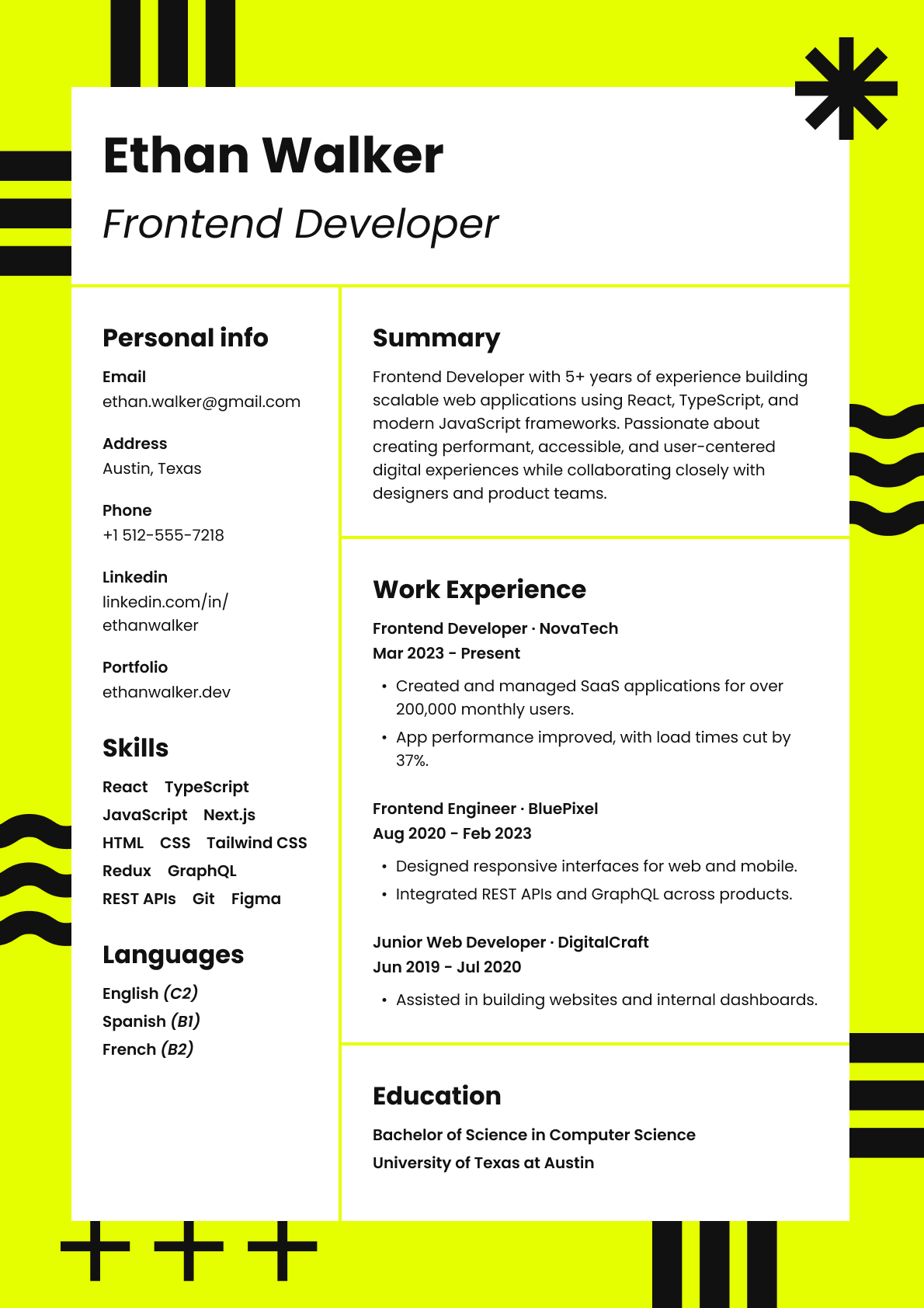
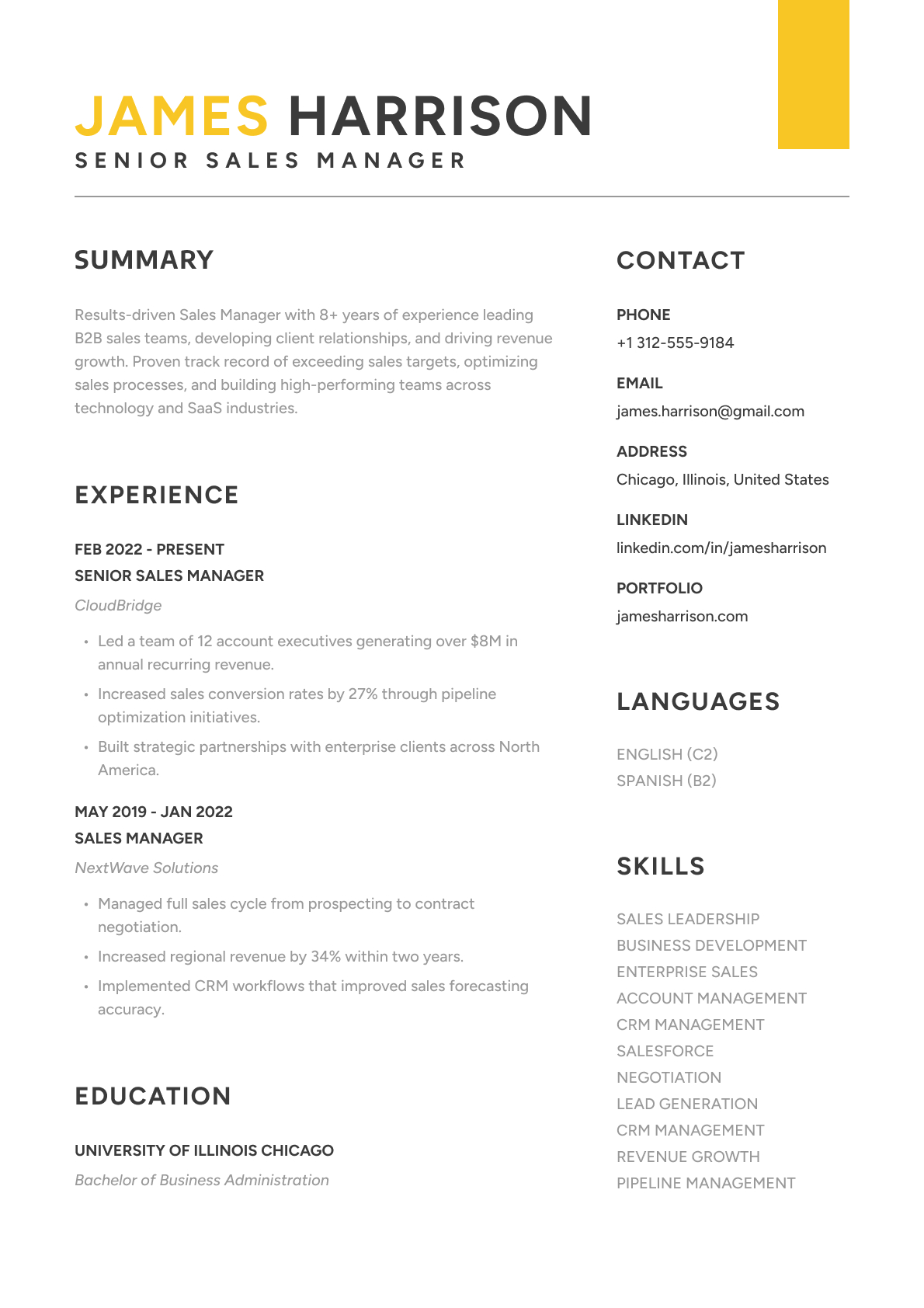
Templates that suit a software engineer resume
Software Engineer resume FAQ
Build your software engineer resume
Paste the job posting and your notes — get a keyword-aligned, ATS-ready resume in minutes. Preview free.
Build my resume