Frontend Developer Resume — Tailored to the Job, ATS-Ready
A frontend developer resume lives or dies on specifics: the frameworks you actually shipped with, the performance and accessibility work you owned, and the products behind the code. ATS scans for the exact stack named in the posting, so listing React when the role says React — and showing where you used it — matters more than a wall of adjectives.
What makes a strong frontend developer resume
Concrete stack — name the frameworks, languages, and tools you shipped with, not a buzzword cloud.
Impact on the product — performance, accessibility, conversion, or DX you measurably improved.
Scope and ownership — features you led end-to-end, design systems, or apps you rebuilt.
Match to the posting — mirror the exact stack and responsibilities the job lists.
Generic AI vs. tailored to the role
Most tools pad a frontend developer resume with competence-claims. Resumetion replaces them with concrete facts from your real experience.
Passionate engineer with extensive experience building scalable, cutting-edge web applications.
Rebuilt a legacy React/TypeScript dashboard into a component library, cutting initial load 1.8s and unblocking three product teams.
Keywords ATS looks for
Applicant tracking systems rank on terminology from the posting. These come up often for frontend developer roles — include the ones that match your real experience.
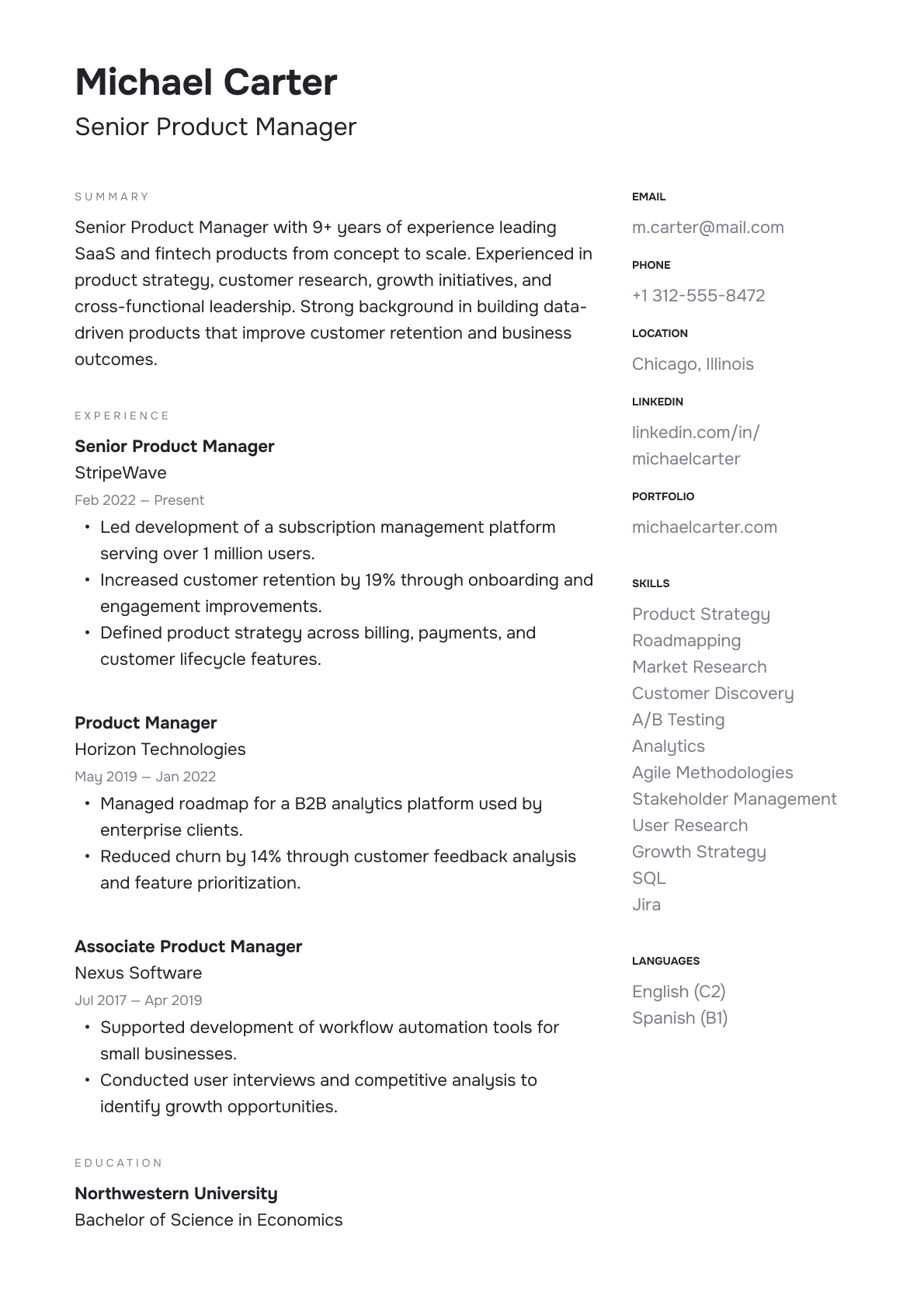
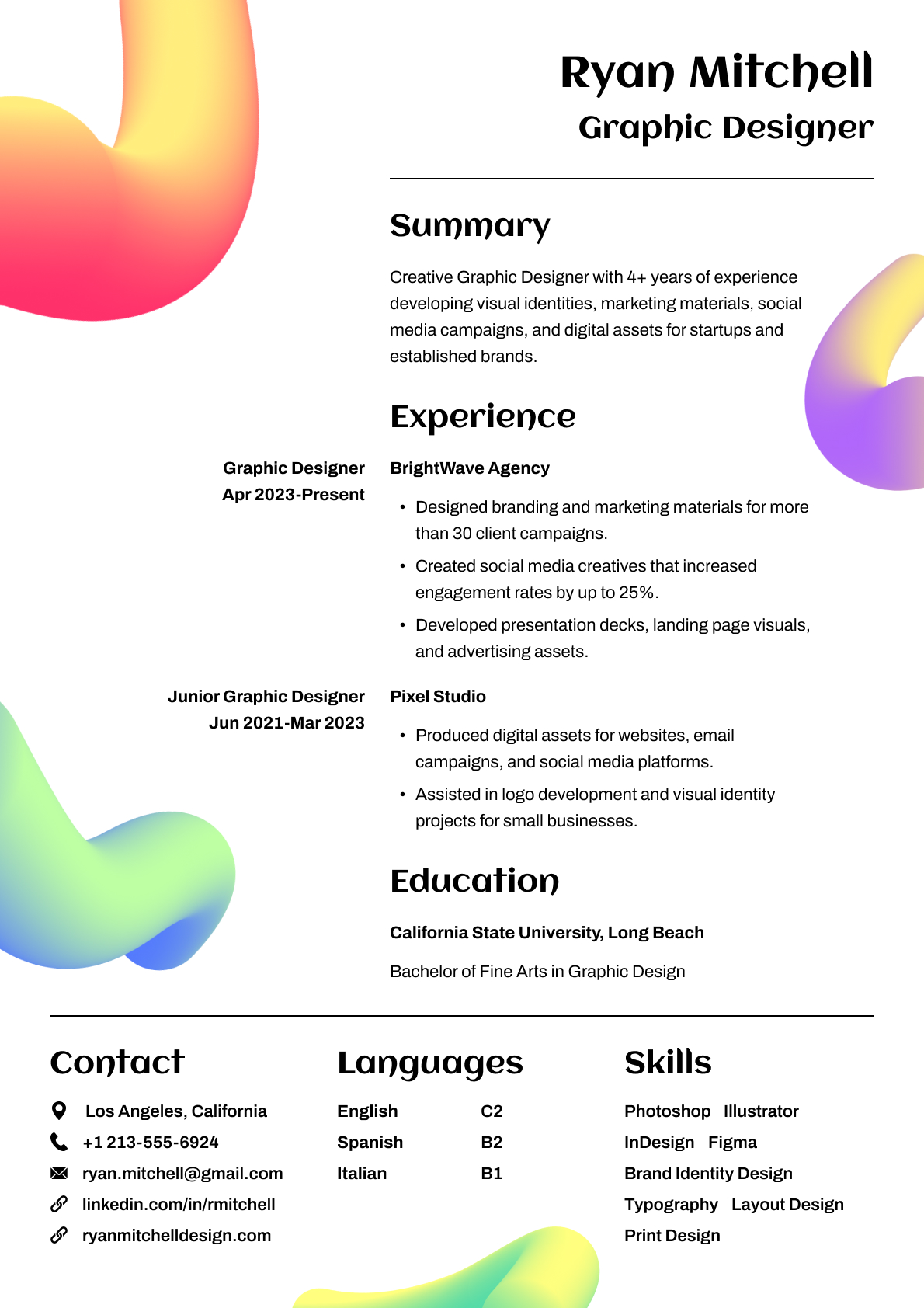
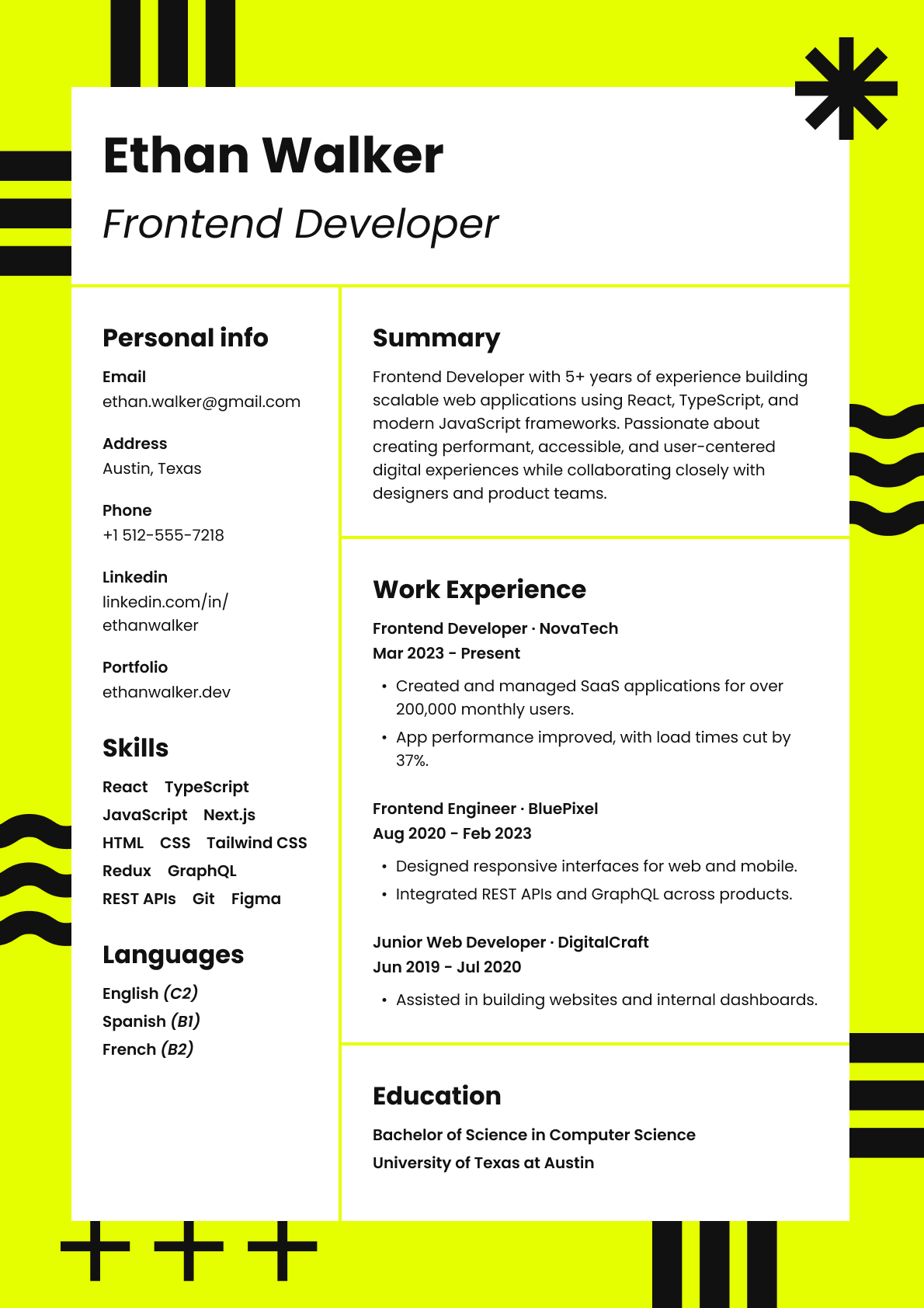
Templates that suit a frontend developer resume
Frontend Developer resume FAQ
Build your frontend developer resume
Paste the job posting and your notes — get a keyword-aligned, ATS-ready resume in minutes. Preview free.
Build my resume